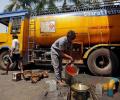
The Reserve Bank of India has opened a special dollar window for three public sector oil marketing companies (OMCs) to meet their daily dollar requirements, aiming to curb the rupee's depreciation amidst global economic uncertainty. Additionally, the RBI has introduced new regulatory measures for the foreign exchange market, including reducing the threshold for derivative transactions without underlying exposure and introducing a Foreign Exchange Risk Reserve (FERR).
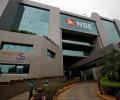
The National Stock Exchange (NSE) has set its initial public offering (IPO) price band at Rs 1,700-1,785 per equity share, with the subscription period running from September 17 to September 21, aiming to raise up to Rs 22,569 crore.

Indian benchmark indices Sensex and Nifty rebounded in early trade after two days of losses, driven by easing crude oil prices and strong buying in blue-chip IT stocks, despite continued global uncertainties. Track Sensex, Nifty on September 30.

The Supreme Court has refused to quash proceedings under the Prevention of Corruption Act against former NSE MD and CEO Chitra Ramkrishna, stating that the trial court will determine whether she can be considered a 'public servant' under the Act.

The Supreme Court has upheld the Bombay High Court's decision to quash the Yes Bank administrator's write-off of Rs 8,415 crore worth of Additional Tier 1 (AT-1) bonds, criticising the RBI and Yes Bank's conduct.

Metropolitan Stock Exchange of India (MSE) plans to raise Rs 120 crore from investors in an attempt to stay afloat. The beleaguered exchange's board has approved issuance of 1.19 billion equity shares of face value Rs 1 at a premium of Rs 1 through private placements, according to a disclosure on its website.

Indian information technology (IT) stocks, led by Infosys, experienced a significant selloff, dragging the Nifty to a two-month low, primarily due to escalating West Asian tensions pushing crude oil prices higher, and concerns over upcoming large IPOs diverting funds from secondary markets. The sector is also grappling with the long-term implications of AI disruption.
Indian benchmark indices, Sensex and Nifty, experienced declines in early trade, primarily due to a surge in crude oil prices and a retreat in Wall Street, as investors reduced exposure to risk assets amidst geopolitical uncertainty. Track Sensex, Nifty on August 7, 2026.

Indian benchmark stock indices, Sensex and Nifty, rebounded on Friday, driven by value buying in banking, oil & gas, and auto shares following recent sharp losses. The Sensex climbed 315.20 points to settle at 73,895.74, while the Nifty rose 77.40 points to 23,140.50.

Indian benchmark indices Sensex and Nifty opened higher, extending their previous session's rally, driven by a decline in global oil prices, despite continued selling by Foreign Institutional Investors.

The Securities and Exchange Board of India (Sebi) is reportedly 'close' to approving the National Stock Exchange's (NSE) initial public offering (IPO) draft documents, with an expected market debut by early next month. Sebi Chairman Tuhin Kanta Pandey also emphasised the regulator's focus on enhancing market resilience against evolving risks, including technology failures and the impact of artificial intelligence.

Shares will be allocated across different institutional investors, including domestic mutual funds, other domestic institutions and FPIs.

Investors opening new brokerage accounts must choose a broker suited to their style.

Indian benchmark equity indices, Sensex and Nifty, rebounded in early trade after two days of losses, driven by strong buying in blue-chip IT stocks and a rally in global markets.
The National Stock Exchange of India's (NSE) mega Rs 22,569-crore initial public offering (IPO) was fully subscribed on the second day of bidding, driven by strong interest from qualified institutional buyers and non-institutional investors.
Indian benchmark indices Sensex and Nifty saw a rebound in early trade, driven by a moderation in crude oil prices, despite persistent selling by Foreign Institutional Investors (FIIs) and mixed global market cues.

'Regulations give a particular minimum amount of shares to be given in the OFS or IPO -- without which one cannot do the IPO.' 'We got that number on the day of filing of updated DRHP -- sufficient for us to go live with the IPO.'

Indian benchmark equity indices, Sensex and Nifty, opened higher on Monday, driven by strong buying in blue-chip stocks like HDFC Bank and Infosys, despite persistent geopolitical tensions and elevated crude oil prices.

Jio Platforms Ltd's Rs 30,213-crore initial public offering (IPO) achieved full subscription within 100 minutes of opening, making it the fastest among India's mega issues, surpassing previous records set by companies like Reliance Power.

'Read the prospectus as a capital allocator deciding whether the business deserves your capital at the offered price.'

Indian benchmark stock indices, Sensex and Nifty, experienced mixed trading following the introduction of a new Closing Auction Session (CAS) for shares with futures and options (F&O) contracts, aimed at enhancing price discovery transparency. Track Sensex, Nifty on August 4

Indian benchmark indices Sensex and Nifty experienced declines in early trade, ending a two-day rally, driven by a spike in Brent crude oil prices above USD 101 per barrel and investor caution ahead of the Reserve Bank of India's monetary policy decision. Track Sensex, Nifty on October 7.

The National Stock Exchange's (NSE) initial public offering (IPO) is expected to shrink in size to Rs 25,000-27,000 crore, down from an earlier estimate of Rs 30,000 crore, as some shareholders are reducing their offer for sale (OFS) stake.
The National Stock Exchange of India Ltd (NSE) has received regulatory approval from SEBI for its long-awaited Rs 30,000-crore initial public offering (IPO), positioning it to potentially become the country's largest-ever public issue.
Indian benchmark indices, Sensex and Nifty, saw gains in early trade, driven by a notable drop in crude oil prices and renewed buying interest from Foreign Institutional Investors (FIIs).
India's markets regulator, Sebi, has reintroduced rules allowing companies to repurchase their own shares through stock exchanges in the open market, effective August 1, 2026. The new framework caps the execution period at 66 working days and aims to enhance flexibility and efficiency for capital allocation.

Indian benchmark equity indices, Sensex and Nifty, rallied in early trade, driven by positive global market trends and easing crude oil prices, despite the US Federal Reserve's hawkish stance tempering overall sentiment. Track Sensex, Nifty on September 18.
Indian benchmark indices, Sensex and Nifty, ended marginally lower after recovering from sharp intraday losses, driven by cooling crude oil prices and buying interest in HDFC Bank and IT sector stocks.
Indian stock markets, including the Sensex and Nifty, experienced a significant tumble in early trade, driven by escalating tensions in West Asia that pushed crude oil prices close to the USD 100-per-barrel mark, alongside selling in IT stocks and fresh foreign fund outflows.

The Reserve Bank of India (RBI) has rejected Tata Sons' application to surrender its non-banking finance company (NBFC) licence, a decision that mandates a public markets listing for the conglomerate's holding company as it is classified as an upper-layer NBFC.

Jio Platforms Ltd's Rs 30,213-crore initial public offering (IPO) has garnered bids worth Rs 3.73 lakh crore, achieving a subscription rate of 5.57 times the shares on offer, driven by robust institutional and anchor investor demand.
Indian benchmark equity indices, Sensex and Nifty, ended sharply lower, with the Sensex tumbling 876.37 points and the Nifty dropping below 22,900, primarily due to a decline in private bank stocks like HDFC Bank and Axis Bank, alongside weak global market trends.

Indian equity benchmarks Sensex and Nifty extended their losses for a third consecutive session, with the Sensex declining 460.30 points and the Nifty dropping 123.70 points, primarily due to surging crude oil prices driven by escalating tensions in West Asia and weak global cues.

Tata Trusts Vice-Chairmen Venu Srinivasan and Vijay Singh challenge a proposed reorganisation of Tata Sons, alleging a lack of trustee consultation and raising concerns about its regulatory and financial implications.
Indian benchmark equity indices, Sensex and Nifty, rebounded after a two-day losing streak, driven by strong buying in blue-chip IT stocks and positive global market cues, with the Sensex climbing 330.92 points.

Indian benchmark indices, Sensex and Nifty, experienced a sharp decline, with the Sensex tumbling 1,247.71 points and the Nifty settling below 23,100, primarily driven by a significant spike in crude oil prices and weak global market trends.

Jio Platforms Ltd's Rs 30,213-crore initial public offering was subscribed 3.01 times, attracting approximately Rs 66,500 crore in public bids, with qualified institutional buyers oversubscribing their portion by 9.02 times, while retail investor demand remained under-subscribed at 0.68 times.
The National Stock Exchange (NSE) is reportedly planning to launch its much-anticipated initial public offering (IPO), estimated at around Rs 30,000 crore, in September, potentially valuing the exchange at over Rs 5 lakh crore.

'The larger lesson for India Inc is that promoter oversight and professional management are not inherently contradictory. The difficulty arises when the boundaries between the two are unclear.'
Indian benchmark indices, Sensex and Nifty, saw declines in early trade due to escalating crude oil prices and ongoing US-Iran hostilities, which subdued investor risk appetite.
